
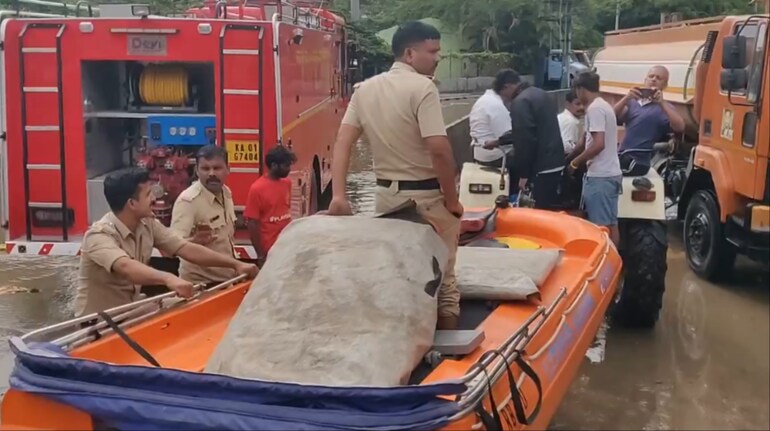
📰 When the Boats Took Over Bengaluru’s Streets
A heavy overnight downpour on Sunday left large parts of Bengaluru under water. The northern-eastern suburbs, especially around Horamavu, took the worst hit — some areas were so badly flooded that rescue teams had to resort to boats to reach stranded residents.(Hindustan Times)
In the aftermath, even major workplaces weren’t spared. Manyata Tech Park — one of the city’s biggest tech hubs — turned almost into a shallow lake. At several entry points, water depth rose above two feet, forcing the park’s management to coordinate with civic authorities to pump out the water.(Hindustan Times)
🌊 What Went Wrong — Again
Flooding was particularly severe in low-lying and poorly drained areas such as Vidyaranyapura Sai Layout and other parts of Horamavu. In many places, water rose knee-deep — disrupting homes, daily commutes, and basic mobility.(Hindustan Times)
Key arterial roads and stretches across the city — including parts of the Outer Ring Road corridor, New BEL Road, Nagawara, and areas around the infamous Panathur RUB — were inundated, adding massive traffic chaos.(Hindustan Times)
This is not the first time such flooding has occurred. The recurrence underscores the fact that despite repeated warnings and citizen complaints, necessary storm-water drain (SWD) infrastructure improvements and road upgrades remain either pending or insufficient — leaving the city vulnerable every time rains hit hard.(Hindustan Times)
📣 Voices, Reactions & Public Outcry
The flooding sparked outrage across social media and among residents and workers alike. Many sarcastically pointed out how the city — and even supposedly high-end tech parks — turned into “flood zones.” One comment captured the frustration perfectly:
“Bengaluru Ports are booming under Brand DK’s dynamic leadership! Soon to launch: Tunnel roads, Underwater Metro, ferry rides — all thanks to the rain.” (Hindustan Times)
For many, it felt like yet another sign of civic neglect — a failure to invest properly in drainage infrastructure, despite repeated promises and warnings.(Hindustan Times)
🔍 Bigger Picture — Why This Matters
The recent floods highlight deep-rooted vulnerabilities in Bengaluru’s urban planning and drainage infrastructure. With growing urbanization and more construction on historically low-lying or valley-like areas, the city’s older drainage channels and lakes are often bypassed or encroached upon.(Hindustan Times)
As climate change and erratic rainfall intensify, sporadic heavy rains — like the one this week — are likely to become more common. Without long-term, well-planned, and accountable infrastructure upgrades (storm-water drains, retention ponds, flood-resilient planning), the residents — and the city's economy — will continue to suffer.